Different from art fairs, biennales are large non-selling exhibitions of international art that run every two years and provide a platform for showcasing and discussing contemporary art practices outside of the traditional museum system. A curator or curatorial team sets the theme, tone and vision of the event and strives to bring out of the box practices and artworks to new audiences. Focused on cutting-edge contemporary art practices and commentary, biennales can run anywhere from a few weeks to a few months offering opportunities for the global art community to converge and experience the happening.
Where did they start?
Biennales, as we know them now, were born in Venice, Italy with a resolution by the city council in 1893 to celebrate national artistic talent. From there, other major capitals around the world took the baton and established their own installments of their biennale making their mark on the art world calendar.
In the 1990s hundreds of biennales cropped up around the globe, cementing their role as major events for discourse, challenge, and exploration of contemporary art. There are now over 300 biennales around the world, each of which acts as a vehicle to deliver a message unique to the hosting city to an international audience.
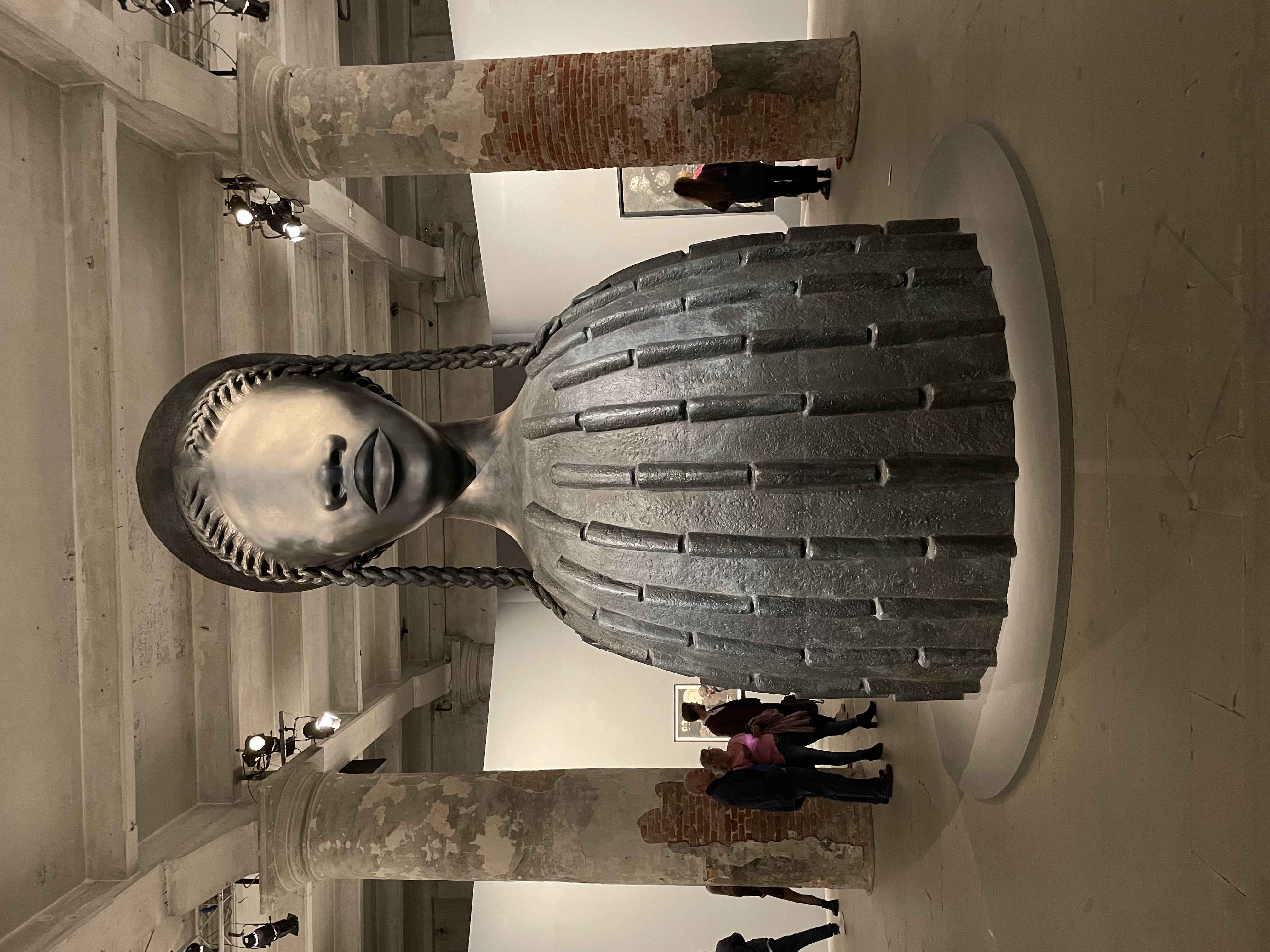
Image: Simone Leigh, Venice Biennale installation image October 2022