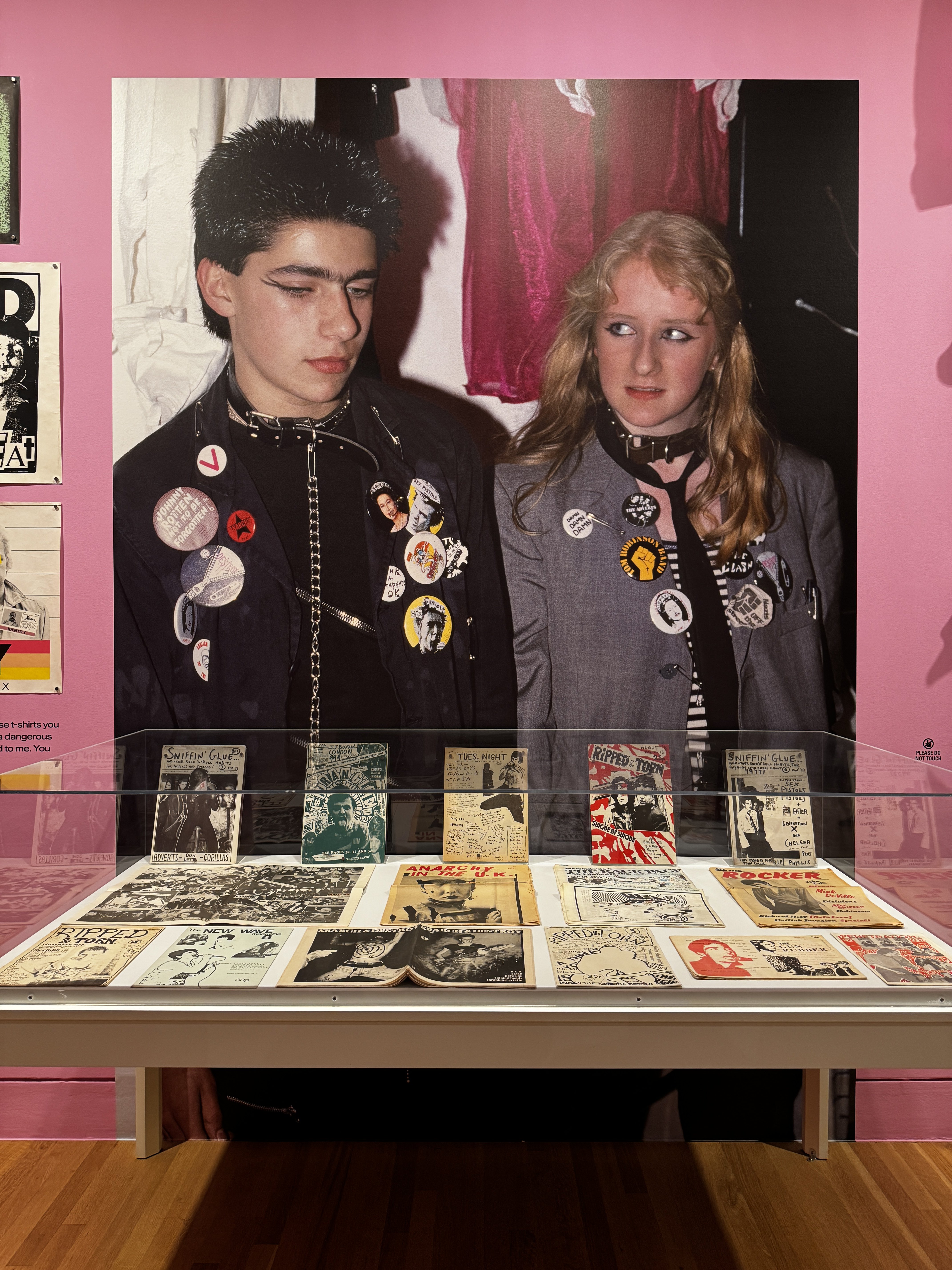
As an undergraduate at the University of Pennsylvania, I designed a major in Modern Revolutions and wrote my honors thesis on the punk movement in Great Britain from 1975 to 1977. I studied the history and politics, and I was equally interested in the culture the movement produced: the lyrics, fashion, posters, buttons, fanzines, and graphics that gave punk its visual language.
Because I had to do primary source research, I tracked down people who had actually been part of the movement. I found people who had made fanzines and asked them to send them to me. This was long before you could find any of this online, and things arrived in the mail from people I had never met. I was learning about a revolution through the things people made and the people who had been there.
Seeing Outsiders, Outcasts, Rebels + Weirdos: Punk Culture 1976–86 at the Skirball Cultural Center was incredibly exciting. The exhibition brought together more than 500 objects and pieces of ephemera, including handmade flyers, zines, buttons, posters, photographs, and clothing by Vivienne Westwood and Malcolm McLaren. So many of the bands and people I had researched were there. I was suddenly standing in a room surrounded by material I had spent so much time trying to find and understand as an undergraduate.
I had wanted to organize a punk exhibition when I was at the Orange County Museum of Art, focusing on the incredible Orange County scene, and I never did. This show filled that space for me. It also reminded me why I had wanted to make one. Punk wasn’t only music, of course. The lyrics, clothes, printed matter, performances, and attitude were all part of how a generation communicated what it believed and what it wanted to resist.
Decades after writing that thesis, I am still interested in how art and culture record a moment differently than history can alone. The things people make while they are living through change can eventually become the things through which the rest of us can understand.
What are we making now that will tell people what it felt like to be alive today? And are we doing more than a good enough job?