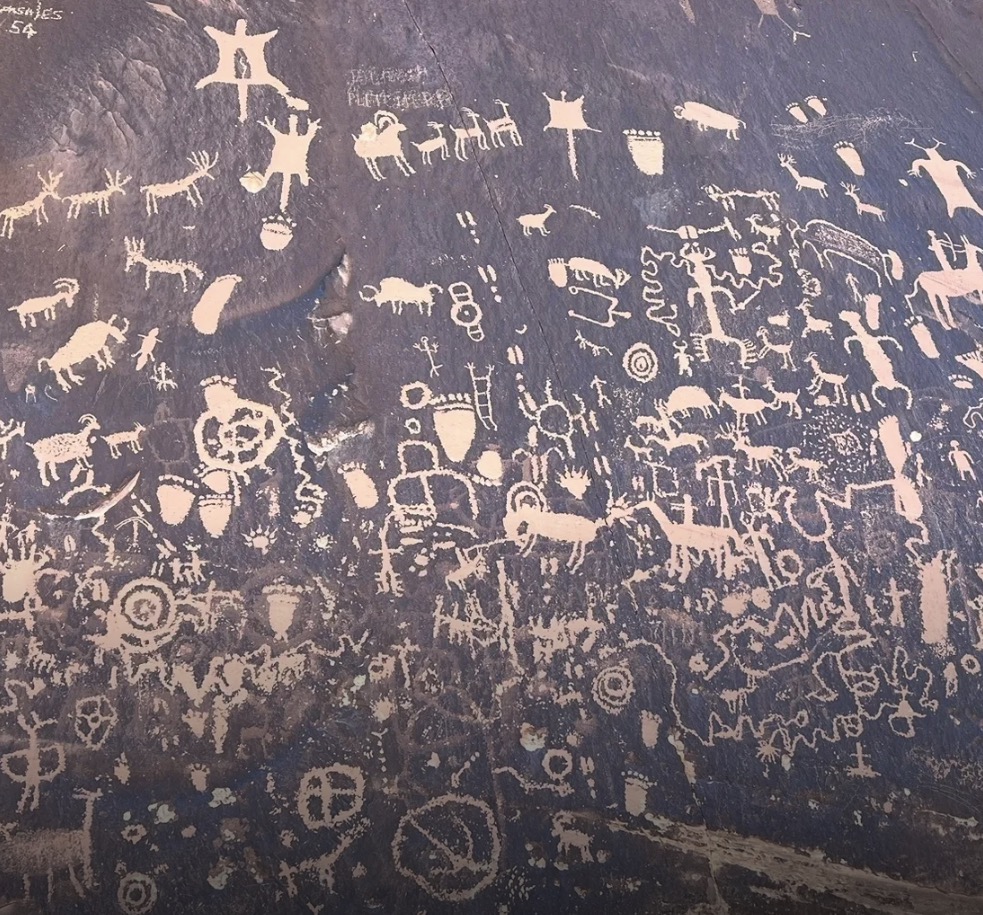
During our recent trip to Utah, we visited Newspaper Rock, an extraordinary collection of petroglyphs carved into a sandstone cliff over thousands of years. The surface is covered with figures, animals, handprints, spirals, and symbols, made by people who lived in and traveled through this landscape long before us. I was fascinated by the density of the marks, the way images made centuries apart coexist on the same surface, and how much we can recognize without necessarily understanding what each one meant to the person who made it.
I’ve spent much of my life looking at the marks artists make, and standing in front of Newspaper Rock made me think about Sue Williams and Nate Lowman. Sue’s paintings and drawings often begin with gestures that seem spontaneous, even unruly. Figures, fragments, lines, and shapes accumulate, sometimes becoming recognizable and sometimes resisting interpretation. Nate uses marks and symbols from contemporary visual culture, including bullet holes, stains, and graphic imagery, transforming things we might ordinarily overlook into subjects for sustained attention.
Looking at Newspaper Rock, I was interested in the impulse to leave evidence of our presence. We draw, scratch, paint, carve, and arrange marks on surfaces, sometimes to communicate something specific and sometimes because making an image is itself a way of engaging with the world. The people who made these petroglyphs and the artists working today lived in profoundly different circumstances, yet the human desire to make marks connects them across time.
I love that we can stand in front of a rock in Utah or a painting in a museum and encounter the physical evidence of someone else’s hand. We may never know exactly what they intended, but we can still look closely, recognize patterns, and begin asking questions. Thousands of years later, the marks remain.