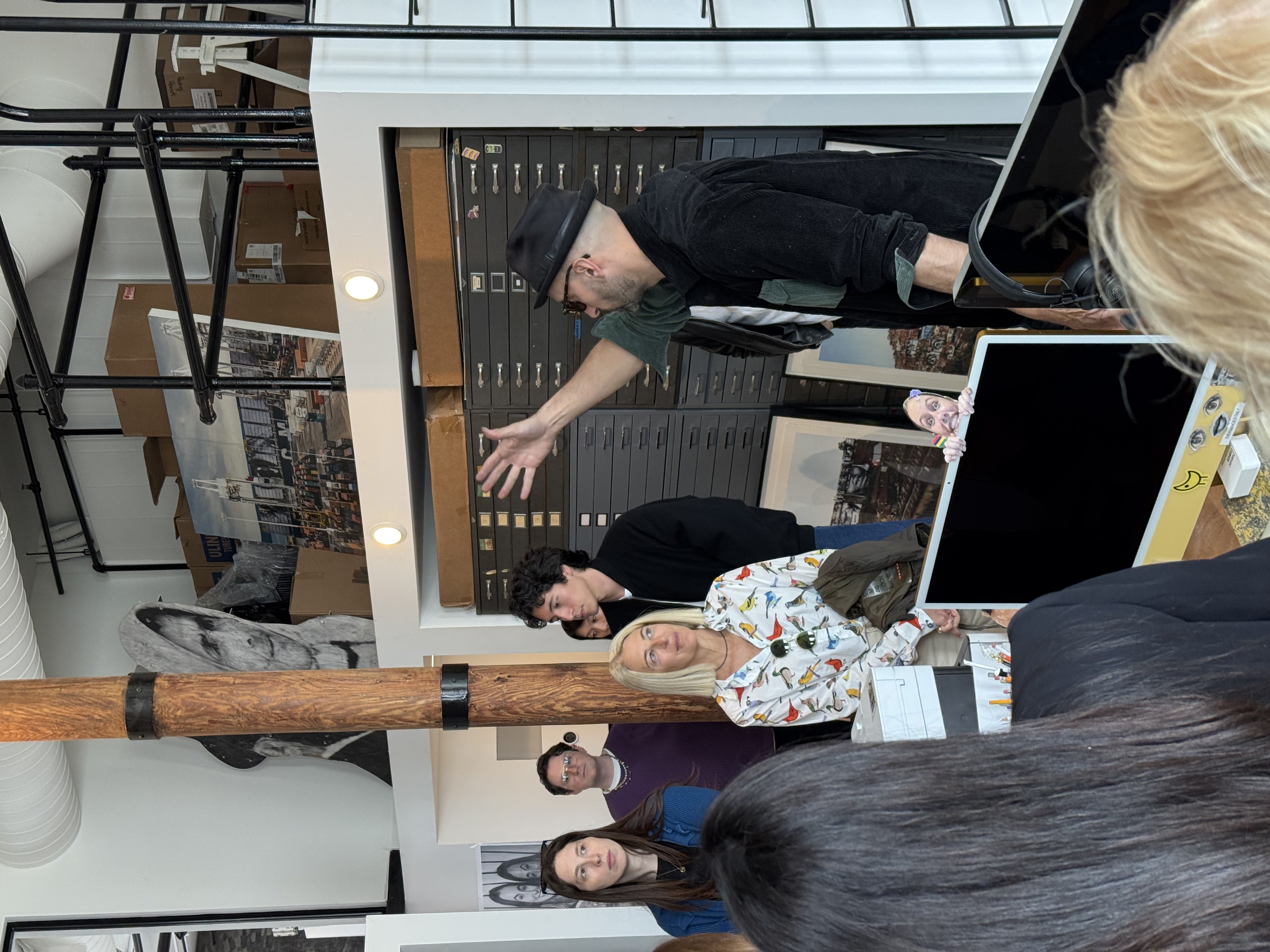
After visiting JR’s studio in New York, where he is preparing for a new project opening this month on the Pont Neuf in Paris, I spent the afternoon walking through SoHo and the East Village to the Keith Haring exhibition at The Brant Foundation that focused on the years 1980–1983.
Seeing the Haring works immediately after spending time with JR created an unexpectedly direct line between two artists deeply committed to public space and accessibility. Different generations, different visual languages, and a shared belief that art can interrupt daily life and enter spaces not traditionally reserved for it.
The early Haring works still feel urgent due both to their visual energy and their refusal of silence. The exhibition frames those years through activism, urban intervention, visibility, and resistance to fear and ignorance—ideas that unfortunately feel no less relevant now.
Walking around downtown Manhattan, the walls, streets, subway stations, and storefronts all carry traces of artists who understand public space as both a platform and a responsibility.
Seeing Haring’s work while JR prepares his project for the Pont Neuf felt especially powerful—another artist thinking at the scale of the city, asking how art can momentarily transform the way we see one another and the spaces we move through every day.