
This is the first of four itineraries written by About Art Guest Contributor Rebecca Anne Proctor for each issue in February.
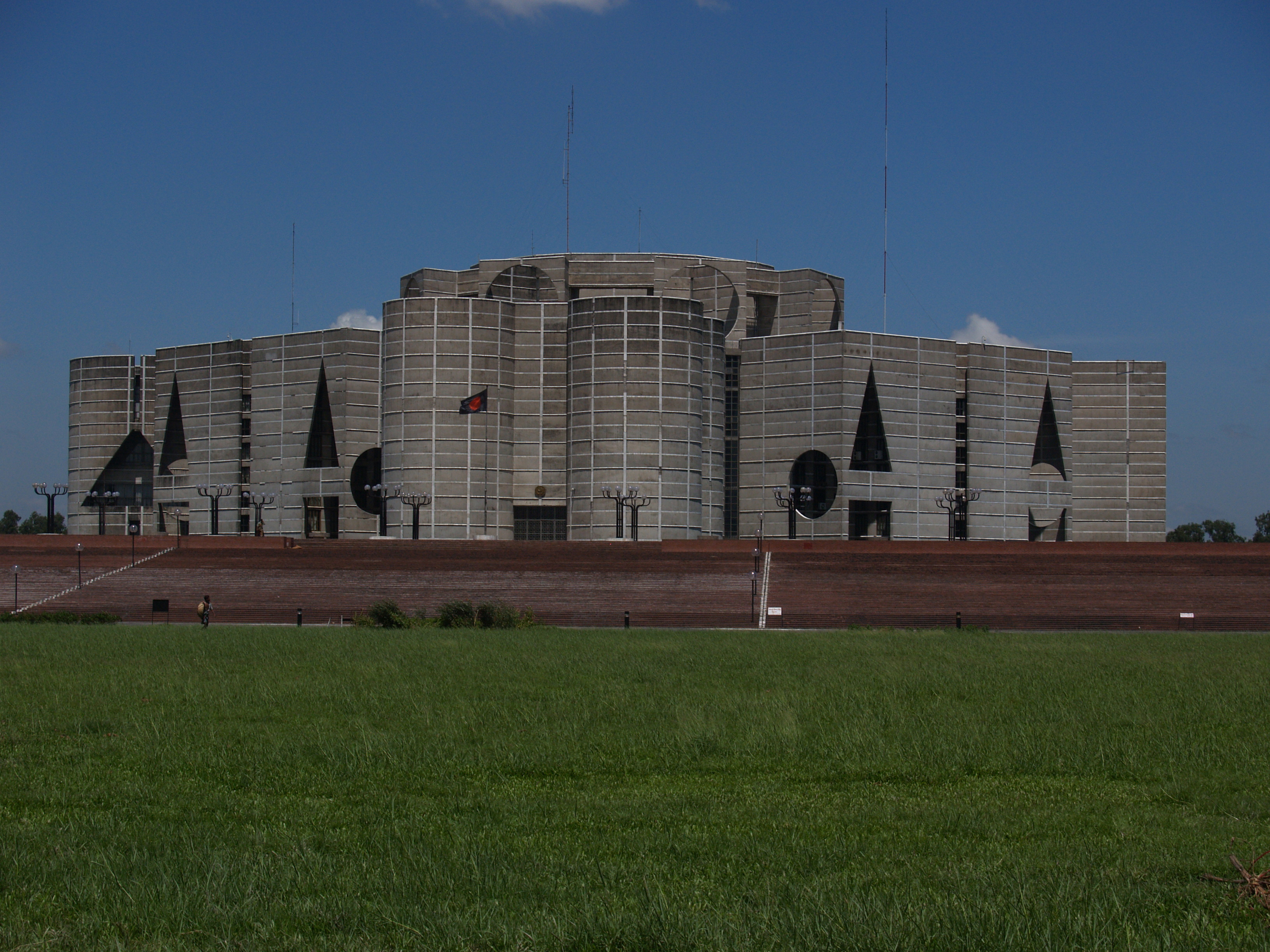
Louis Khan’s brutalist masterpiece in Dhaka, Bangladesh—The National Assembly Building, also known as the Jatiyo Sangsad Bhaban—is among the largest legislative complexes in the world. Its design fuses simplicity with disarming grandeur. Completed in 1982 in collaboration with local architects Muzharul Islam and Alam Syed Zahoor, the structure reflects post-independence modernist principles rooted in the local heritage just over a decade after Bangladesh gained independence in 1971 from Pakistan.
At present, very few people occupy the building, but next month, when Bangladesh holds its first election since its July 2024 uprising and the ousting of its former Prime Minister, it will once again be full.
During a recent trip to Dhaka, Bangladesh, organized by the Durjoy Bangladesh Foundation, a non-profit foundation promoting the art and culture of Bangladesh and wider South Asia, I was lucky to visit its mesmerizing, masterclass in monumental geometrical design. As I walked around its many halls, organized around a central, octagonal, top-lit Assembly Chamber, I had the sensation at times that I was floating with a realm where the complex interplay of circles, squares, and arcsdanced in unison. As light spills in from various divides, the feeling is one of illumination, transcendence, unity and everlasting monumentality.
Image: An exterior view of the Louis Khan’s National Assembly Building in Dhaka, Bangladesh. Photography by Syed Zakir Hossain
.JPG)

.JPG)